As Governor Charlie Baker’s October 17 vaccine deadline mandate approaches, the Massachusetts Department of Corrections (DOC) are preparing for all state prisons to be put into lockdown.
In August, Baker ordered a vaccine mandate for every Executive Branch employee to prove that they are fully vaccinated by October 17.
Prison Guards, who are Executive Branch employees, have until this Sunday to prove that they are fully vaccinated. If they have not been vaccinated by then they will be suspended.
As of this week, only 60 percent of guards are vaccinated. The majority of the hold outs are waiting on a hail Mary pass from the Governor to ease up on his mandate. Hoping that they can talk him into mandatory testing each week instead of vaccinations.
There is a number of guards who are eligible to retire at the moment. The word is that if the mandate is not lifted then most of them will be putting in their retirement papers. Which will lead to a shortage of guards throughout the prison system.
Rumors are running rampart in the prison blocks. Everything to complete lock downs to modified lock downs. With the cancellation of everything from visitation and recreation to programming and schooling.
The rumors on staffing are even worse. The National Guard working the outside of the prison and taking care of prisoner transportation. Maintenance workers and caseworkers will be working the blocks in place of the retired and suspended guards. With the programming staff and schoolteachers working in the prison’s kitchen.
There is an over/under bet by some of the prisoners on how soon it will be that a video will be released by the DOC that will show some kind of made-up disturbance in a prison to invoke fear into the public and force Baker to lift his mandate.
Prisoners just hope that they’re not treated the same way when the coronavirus first hit our state. The Courts have already told the DOC that the way they reacted to the initial state of emergency last year was wrong and unconstitutional. Will history be repeating itself this Sunday? Time will tell.
]]>FCI ALICEVILLE is not in compliance with any local Alabama State regulation, Federal guidelines, or CDC recommendations. It has not reduced head count, and the facility is still overcrowded. In addition to overcrowding, it is also short staffed. On many occasions we do not get to come out from our cells because there is no officer; inmates subsequently miss their video visits and phone time, as well as are unable to use the showers. Our officers are currently assigned to two cell blocks, or units, of about 240 inmates. When the officer is on unit, he/she can’t be on the other, leaving inmates entirely unsupervised. In addition, that officer regularly goes in/out from other units, which creates the risk of contamination and entirely defeats the purpose of lockdown. Many prisons are consciously operating below the minimum staffing levels in order to maximize profit margins, so it remains unclear as to whether FCI-Aliceville’s understaffing is therefore intentional. However, with THE CARES ACT and additional funds and grants appropriated by Congress, there is more funding now than ever before to hire additional staff to handle this pandemic, and with the current staggering unemployment rate, there is plenty of labor force to tap into.
New arrivals keep being placed with general population after 14 days in quarantine. Recently, because there were staffing issues and no officers in quarantine area, new arrivals were just let out without screening or completing quarantine. My last bunkmate, T.K., was COVID-19 positive, (asymptomatic). I have previously informed the staff, Unit Team, and Warden of my underlying health condition and potential risk of placing someone COVID-19 positive in the same 6×9 cell with poor ventilation, closed door and 22+ hour daily lockdown. Not only have no measures been taken, but also, I was told I would get a “shot” (disciplinary report) for refusing housing. When you refuse housing, they send you to the SHU (segregation housing unit) and there are more sick people there. There is no way to self-isolate or maintain a 6-feet distance from other inmates or staff members at any time. Officers from the SHU, quarantine, and other units are being constantly rotated, thus causing further risk of contamination as well as violating CDC recommendations.
We do not have proper cleaning supplies and our commissary is constantly out of hygiene items. We do not have other options- we are in FBOP custody. Additionally, we have no jobs and many of the inmates at FCI-Aliceville are indigent and unable to shop for necessities. Prisons are not exactly a place where somebody will come forward and offer you something, especially this one- we are all in the same boat here. We are locked in and entirely dependent on the FBOP. Our food is substandard and malnutricious. We have no clean drinking water and insufficient exposure to sun. Even though we have 1 (one) hour REC (recreation) since around September of 2020, our REC time rarely happens because of the shortage of officers, staffing issues, prison events, holidays and weather. When it does happen, our time frequently gets cut in half. All that leads to weakened immune systems, and when combined with already high stress levels, this makes inmates more susceptible to COVID-19. Most inmates have some chronic or pre-existing health condition, and about 79% of inmates have mental health issues that only exacerbate during the lockdown. That can translate into suicides, aggression, and mental health outbreaks.
Because of lockdown, we do not have access to the law library, and counselors operate on modified schedule. During the lockdown (because we are completely cut off from all resources) the counselors only have more work instead of less. However, instead of assigning someone to help with their work, they are being assigned to other duties and constantly get pulled to do other jobs. Staffing issues affect an inmate’s ability to properly litigate their cases in courts, and courts do not automatically extend the deadlines. Many inmates have missed deadlines as a result, and the few lucky ones who knew how to properly file extensions where they had usually granted them. But extensions do not always work in our favor. We are the ones sitting in prison, on LOCKDOWN. I have seen only one person leave on compassionate release from our unit, when so many are qualified! Our medical records officer, Ms. Hester, is perfectly aware that in times of this crisis, this is a life and death issue for every inmate who requests them. Yet she takes six months to produce the proper medical records that could potentially save lives. Our medical care is substandard. Health care contractors have suspended non COVID-19 related care and our local hospital shut down due to financial insolvency.
A stirring rally to remember New Jersey inmates who died of the corona virus took place in Trenton, Patch.com reported. “More than 450 cars gathered from across the state at the Trenton War Memorial for a “Say Their Names” funeral procession. Bearing photos of diseased loved ones, the vehicles cavalcade served as a grim reminder that social distancing is a near impossible task when you are trapped behind bars”. Who will stand up for or remember inmates in FCI-Aliceville when most are immigrants and have families who can’t travel or enter the United States? Likewise, if deported to their home country, they will pose no risk of re-entry and no threat to society. For humanitarian reasons it would only make sense to deport those eligible who are non-violent, first time offenders, have already served the majority of their sentence, and pose no risk. Ninety five percent (95%) of these women are mothers; they are daughters, sisters and family to someone who needs them now more than ever before. First Step Act (FSA) mandated early deportation, but NONE are being implemented by FBOP, DOJ, Sentencing Courts, Immigration Courts or ICE, even upon numerous motions and requests by the inmates.
Interestingly enough, when inmates are infected and die from COVID-19, courts do not view that as “deliberate indifference” on the part of the detention facility. On June 16, 2020 Miami Metro West Detention Center (MDCRD) reported 592 prisoners, 123 employees tested positive, and one died. In the lawsuit, Swain v. Junior, 961 F. 3d 1276 (11th Cir. 2020), the court stated that if defendants (MDCRD) showed that they “did their best”…”neither the resultant harm of increasing infections nor the impossibility of achieving six-foot social distancing in a jail environment establishes the defendants acted with “subjective recklessness as used in criminal law”, relying on Farmer v. Brennan, 511 U.S. 825, 834 (1994). In other words, prisons’ non-compliance resulting in death and irreparable harm was justified. Those sort of inhumane conditions of confinement, which are likely to result in death with no consequences, is commensurate to Nazi concentration camps where people were tortured, slaughtered and placed in gas chambers. Locking someone in a 6×9 cell with COVID-19 is no different.
In “Corona virus: A Second Wave of Infection”, Michael D. Cohen, M.D. describes long term damage from COVID-19. He says: “Evidence continues to accumulate that many patients who have recovered from acute COVID-19 infection have suffered long term organ damage…heart muscle damage…brain damage that has lasting effects on memory and other higher functions. Loss of smell and/or taste…persistent lung, liver and kidney damage have also occurred. Others have reported fatigue, “brain fog”, irregular body temperatures, rashes, and insomnia persisting after COVID…PTSD, depression and persistent anxiety, including nightmares, fear of being alone, and fear of going to sleep”. PLN, November 2020. People in prisons are exposed to the risk of highly infectious COVID-19 with no action taken on the part of the prisons and the government and no meaningful measures taken to prevent it at the detention level.
Is this the United States of America? Is this not an infringement of our Eighth Amendment Constitutional right against cruel and unusual punishment? If it was decided that “Infringement of Haze’s First Amendment Rights itself constitutes an INJURY” in Haze v. Harrison, 961 F. 3d 654 (4th Cir. 2020), then infringement of the Eighth Amendment should constitute an INJURY. An INJURY should translate into remedy, relief, and injunctions.
Inadequate medical care, inaccessible mental health care, malnutrition, inability to access the law library, and insufficient recreation time are only a few examples of Eighth Amendment violations. In McCray v. Lee, 963 F. 3d 110 (2nd Cir. 2020) it was decided that lack of exercise due to snow in outdoor exercise yard constituted an Eighth Amendment violation. In a suit filed in October 2020 by Raymond Skelton in NJ, deprivation of properly nutritious food is alleged to be an Eighth Amendment violation. In Briggs v. Dunn, 257 F. Supp 3d 1171 (M.D. Ala. June 27, 2017) it was decided that mental health services “simply put…horrendously inadequate” is a violation of the Eighth Amendment, and the same decision was arrived at in Head v. Dunn, Case No. 2:20-cv-00132-SMD, U.S. D.C. (N.D. Ala. 2020). “The cruel and unusual punishment clause of the Eighth Amendment imposes a DUTY upon prison officials to ensure the inmates receive adequate medical care” Salahuddin v. Goord, 467 F. 3d 263 (2nd Cir. 2006), same in Bardo v. Wright, Case No. 3-17-cv-1430 (JBA) USDC (D.Conn). Mental health care is especially important because many inmates lost their family members and there is no counseling available, and inmates are unable to properly grieve in overcrowded facility and contact their family while on lockdown.
Additionally, in “DOJ Finds Frequent Use of Excessive Force in Alabama Prison” published by David M. Reutter in PLN, November 30th, 2020, it is stated: “The US Department of Justice, DOJ, issued a report that found the Alabama Department of Corrections (ADOC) violates prisoner’s Eighth Amendment rights by frequently using excessive force. The report found overcrowding and understaffing are major contributors to the improper use of force”…”Two examples of guards inappropriately using chemical spray were detailed”. “Guards often fail to report or accurately document the use of force”… “evidence of officers placing inmates to segregation to let injuries heal unobserved and undocumented”. This is all too familiar as on April 7th, 2020 this is exactly what happened in my case. I was pepper sprayed because I asked to open my cell door. Records were falsified and I was thrown into the SHU with injuries for thirty (30) days. Since April of 2020 I was continuously requesting medical records and to this day, they have not been produced by FCI Aliceville. The records of the report as well as DHO records were falsified or conveniently incorrectly recorded. All appeals to the Warden, Regional Director and Central Office were returned untimely, with no due diligence or investigation of any asserted claims and rejected for process without merits determination. This is how FBOP operates- the system is designed for them and is only an illusion of any rights to the inmates. It does not matter who is right because they ALWAYS win.
Most inmates in FCI-Aliceville are immigrants and do not speak or write English. This is the only thing I can do being behind bars. FCI Aliceville is not the only Federal Detention facility. Detainees serving unduly harsh and long sentences are similarly situated in other prisons. This is not a humane or fair way to punish people, and this is happening in America, the land of the free. We are a civilized nation and a leader in Human Rights, a Nation for the People and by the People. Not only do the United State Government, lawmakers, Congress, FBOP, DOJ, and other government agencies must take immediate measures to expedite releases and deportations like it was done by many States, but also prison staff and officials must communicate and be transparent about risk of death, inhumane conditions of confinement, and the public safety concerns it creates. Prisons are part of our community: many people work at prisons and live in nearby surrounding areas. The inmates are being released back into these communities and deported. It is absolutely necessary to address COVID-19 in Federal Prisons and find a solution to safely house, deport and release inmates in the most expeditious way.
Time is of essence: Lives are at Stake and All Lives Matter.
Written by Julia Teryaeva – Reed, an Inmate at FCI Aliceville
]]>As other states in our country have taken part of the mass movement towards treatment and rehabilitation for their prisoners, Massachusetts Department of Corrections (DOC) has ignored that movement all the while costing the taxpayers of Massachusetts hundreds of millions of dollars on a broken and corrupt prison system.
After last year’s criminal justice reform bill was passed through the State House, tens of millions of dollars were added to the DOC’s budget to implement those reforms throughout the prison system. As progressive minded advocates of prisoners were ecstatic over this history making bill, they forgot to address the most important part that was needed for this reform to take place, the DOC administration.
The biggest hurdle this reform bill faces is the Weld era’s prison staff that are now in charge of the DOC and each individual prison. Former Governor William Weld was famous for punishing prisoners when he was Governor in the 1990’s. He directed his DOC Commissioner to take away most of the programs and schooling the DOC offered at that time. He streamlined a new maximum-security prison to be built (SBCC), even though his DOC staff recommended more minimum-security beds. All the staff the DOC employed were taught and trained with that punishment as their focal point of their jobs, hidden under the guise of “security”.
When Governor Baker signed the reform bill, and with that the increase in the DOC budget, he must have known that a policy and mindset change was needed in the DOC administration for this reform to truly take place. Most, if not all, of the current administration and policy makers were either trained under that Weld “punishment” era or were trained by someone from that era. They were taught not to coddle the prisoners. If you do you are considered a “white hat” and weak. If a staff member wants a promotion, he or she must do it through “security” ideas and not through helping or treating the prisoners. All one must do is look at the current administration at the top of the DOC and at every prison to see this is true. The administration all come from backgrounds as either guards, caseworkers or secretaries for some administration staff member. You do not see anyone in a position of power that truly believes in treatment and programs. When we speak to the administrators about programs we are condescendingly dismissed and brushed away.
When the DOC received the big increase in their budget to deal with the programs and treatment in the reform bill, they spent the money on “security”. The DOC administration immediately spent money on buying cameras for every prison in Massachusetts. They created a new task force to work outside all the prisons, with brand new trucks and gear. They reduced the number of minimum-security beds, which costs less to house prisoners then in medium or maximum security. And in some prisons, they cut programs that were in line with the reform bill.
Massachusetts spends more money per prisoner than any other state in the country. Right around $70,000 per inmate. There are nearly 7,500 hundred prisoners and roughly 4,500 employees in the Massachusetts DOC. That is about 1 staff member for every 1.6 prisoners. It is the highest staff to prisoner ratio in the country. After hearing all those numbers, you would think that the recidivism rate in Massachusetts is one of the best in the country. Well, you are wrong. Massachusetts is not even in the top half when it comes to recidivism rates in the country. It should make you think how other states, that spend less money on their Department of Corrections, have a better recidivism rate then Massachusetts. Could it be that the other states have qualified and reform minded administrators running their prison systems?
As a prisoner in the DOC I’ve been to six different prisons. I’ve seen numerous administrations and numerous administration changes over the years. Each administration thinks they can run a prison better than their predecessors. I’ve been through all the policy and regulation changes. Some administrations micromanage their prisons and some just don’t care what happens in their prisons. What I’ve notice recently though is the Massachusetts DOC has adopted the ‘smoke and mirrors’ approach to running their prisons. They put out reports that certain programs are up and running at a prison. Currently at NCCI-GARDNER they list over 40 programs that are available to the prisoners. They are listed in the inmate orientation manual and the DOC Program Description Booklet. But the problem is about half of the programs listed are no longer available to the prisoners. With the increase in the DOC budget for programming how is it that there are now less programs available then what the DOC promotes to the public? Smoke and mirrors.
It is widely believed that what the DOC did with the increase in the budget was to reward the workers and unions that publicly supported Governor Baker in the last gubernatorial race. After all, that is what Bakers’ mentor, Weld, did in the 1990’s when Baker worked in the Weld administration. Correctional Officers (guards) now make over $100,000 a year with overtime. As long as Baker keeps on putting money in the guard’s pockets, they’ll always vote for him. It’s a quid pro quo situation.
What is needed to fix this corrupt system is a true audit of the prison system. From top to bottom. With the increases in the prison population in the 1990’s came along an increased budget and an increase in the number of staff the DOC needed to run the prisons and administration offices. When the inmate population was over 10,000 the DOC could at least justify to the public that all that staffing was needed to run the DOC. But, with the inmate population cut by 30% over the last decade the DOC administration has not made an equal 30% cut to their staffing. Why does the DOC need staffing for over 10,000 prisoners when they only have 7,500 prisoners currently with expectations there will be fewer people going to prison? Because those staff members will vote for Governor Baker. Wouldn’t the taxpayers of Massachusetts like to see a 30% cut to the over five hundred-million-dollar DOC budget?
At least to me it seems that everyone knows the prison system is broken. But the problem is the people who broke it are the ones who are trying to “fix” it. How is it that the people who are the farthest away from the problem are the ones who are trying to implement the changes? I cannot remember the last time I’ve been asked what would be needed to address the issues regarding reform in the DOC, nor has any other prisoner I know have been asked either. When a true audit of the DOC is done, when everyone’s input is included and heard, that’s when you can start talking about real reform.
]]>Over 150 convictions in Massachusetts have been overturned for prosecutorial misconduct since the 1990’s. These are convictions which were overturned because the prosecutor engaged in fraud or other misconduct that wasn’t discovered until after that prosecutor secured the conviction.
Most of these convictions were overturned because of “Brady Rule” violations. The “Brady” violation came about from a ruling in 1963. In Brady v. Maryland, Air Force veteran John Leo Brady, who was on death row for murder, had his conviction overturned because a prosecutor failed to disclose to Brady’s Lawyers that a co-defendant had confessed to the murder for which Brady was convicted. That decision made it a rule that all prosecutors must disclose to defense counsel any evidence that is “favorable” to the defendant if it is “material either to guilt or to punishment.”
The Brady decision was a major win for defense attorneys throughout the United States. It forced prosecutors to hand over material that was favorable to the defense. But, there was one problem with that ruling; it was left up to the prosecutors to decide what was “material” to guilt or punishment.
In the 1990’s when defense attorneys started to appeal convictions which were based in part on DNA results, they found evidence of other “Brady” violations in the mandatory discovery which was supposed to have been turned over to the defense attorneys prior to trial. There was evidence favorable to a defendant that was not being turned over to their defense attorneys. How are defense attorneys able to claim a “Brady” violation when they don’t know when one exists?
Most Brady violations are only discovered after a defendant has been convicted and sentenced and is serving a sentence. It is when their appellate attorney begins to request files under the Freedom of Information Act, that such abuses are generally discovered. By then, many of these inmates have served years, if not decades, behind bars.
Prosecutors act on an honor system. Defense counsel must trust that they are being provided with everything favorable to the defendant that is material to either guilt or punishment.
The National Registry of Exonerations, however, found that out of the 166 exonerations in 2016, seventy (70) involved misconduct by the prosecuting attorney. The majority of those exonerations were based on the withholding of material evidence.
Instead of prosecutors immediately ceasing this practice of withholding such evidence, they tried to minimize or even excuse it. In 2010, The National District Attorneys’ Association asked the very powerful American Bar Association to pass a resolution to ban the courts from calling “Brady” violations “prosecutorial misconduct” because they were mere excusable errors.
On Monday, June 26, 2007 Judge Richard J. Carey released his 166-page decision involving 7 defendants. He dismissed all their cases on the grounds that two ex-prosecutors intentionally misled the court, withheld critical evidence, in an effort to cover up a huge scandal at a state drug lab in Amherst. His decision focused on former Assistant Attorneys General Kris Foster and Anne Kaczmarek. Judge Carey accused them of committing a “fraud upon the court.”
Judge Carey stated that Foster and Kaczmarek made several “calculated misrepresentations” and concealed both physical evidence and documents. He stated that they ” … violated their oaths as assistant attorneys general and officers of the court.”
The Massachusetts Board of Bar Overseers was established by the Mass. Supreme Judicial Court in 1974 as an ” … independent administrative body to investigate complaints against lawyers and to act as an administrative tribunal to consider disciplinary charges brought by the Bar Counsel.” Where was the Board on those 150 cases that were overturned since the 1990’s you may ask? Not one of those prosecutors was ever brought before the Board in any of those cases. Those prosecutors were allowed to avoid any charges of misconduct by the very Board that the Massachusetts Supreme Judicial Court established to investigate such violations as prosecutorial misconduct.
The message the Board of Bar Overseers is sending is very clear. They will not hold prosecutors accountable for their intentional acts which constitute prosecutorial misconduct.
When the “Brady” rule was established, it relied on prosecutors doing what was already required of them, both professionally and ethically. However, if a prosecutor doesn’t have to worry about being punished for his or her misconduct, what good is the “Brady Rule”? Prosecutors can continue to fail to disclose evidence to defense counsel with no absolutely repercussions to their own license to practice law, their careers, or their reputations. If and when the misconduct is discovered, many of these prosecutors have long moved on to other employment or even other careers.
Most prosecutors only worry only about the number of wins (convictions) they rack up in court, not whether justice is being done. They use rules like the Brady Rule as a guideline or a suggestion, not as a legal and ethical requirement. Who can blame them? The governing Board is not punishing prosecutors who break the rules.
The Board of Bar Overseers has a new case now that they can investigate. They have the opportunity to address the intentional fraud perpetrated upon the court in the Amherst cases, and show the public that such conduct will no longer be tolerated in Massachusetts. If they engage in such conduct, they will be punished for it. Let’s hold both the prosecutors and the Board of Bar Oversees accountable.
By: Padraig Collins
]]>I am searching for answers and the deeper I go the more complex the situation seems to get. Perhaps it was just me being hopeful, but I really thought I might find a simple reason why our prison population has increased by 500% since the 1980s. These aren’t fuzzy numbers, you can check out the sources listed below. It seemed every time I followed up on a lead, it led me down another rabbit hole. Suddenly confronted by a series of contributing factors, I realized that my study was going to take a lot more looking into than I had originally planned. As respect for the readers of this site, I wouldn’t want to put out anything shoddy; so it looks like I’ll be doing some more research.
If you’re wondering, why the effort, well like many contributors and commentators, I have seen the effects of prison on people. Now stick with me, if you think I’m going to say that someone close to me was imprisoned, well you’re right. But, I also have a step-father and sister who worked in the penal system. All of them are amazing people and saw the good and the bad. But it is my brother that inspired this article. Unfortunately, he is gone now. As I try to understand his lost life, it frequently brings me back to the question of prison and its premise of rehabilitation.
It would be a mistake to say he didn’t deserve going. He definitely had done stupid things and had to pay the price. If we had to ascribe blame, I’d have to say that would be my biological father. He taught my brother that you resolved issues with your fists, usually his on my brother. I won’t bore you with the details; let’s just say we didn’t have a very good role model. I watched as an amazing person slowly lost his spirit as it was replaced with anger, bitterness and loss of hope. Resulting in a severely battered teen who stole a car and went to jail for it. With nothing to feed his mind or spirit, his anger grew, drugs and despair followed. You can imagine the rest.
We can’t go backwards, but we can certainly move forward. I have been lucky to be able to work with youth helping them raise their confidence and find better paths. Every time I help one, I’m very grateful for that opportunity. Yet for each I help, there are so many more that aren’t, and statistically will end up the same way my brother did. Seeing firsthand what happens when the odds are against you, my concern for their future is sincere. While child abuse seems initially to be a separate issue, according to research done by Ark of Hope for children and others indicates that 84% of all inmates were abused as children, and 65% of drug users were abused as well. Having been abused as a child will increase their chances of committing a violent crime by 38%. This is probably not a surprise, 82% of abuse victims not receiving help often become abusers themselves. According to this study, 80% of child abuse victims suffer from psychological disorders.
Although it may seem like I’ve gone off on a tangent, if those statistics were even close, the majority of prisoners were abused as children and just as likely to be suffering from mental health issues. So what does that mean for our prison system and for civilians once they are released? If even half of the prison population had previous mental health issues, are the prisons and the correctional officers prepared and set up to deal with those circumstances? If they are not, why are they warehousing them there?
If the recent incidents of mass shootings in the U.S. are an indication of unaddressed mental health issues, it should be a concern for everyone. What I can’t wrap my head around is why it isn’t a bigger concern? Why is it not foremost in the minds of those running this country? They must be aware of the correlation. I can understand why the average person wouldn’t know, why should they? Unless directly affected from either side of the equation, it would typically not be a topic that comes up in conversation. The only reason why I have started to discover more about it is because of my personal loss and quest to understand.
Naturally, when something is not addressed you have to surmise that the thing is serving some purpose. It can’t be that people don’t really care? Maybe I’m wrong, but as the rate of incarceration, recidivism and senseless mass shootings increase, at some point people will have to start questioning their cause. As the estimates for people going to prison increase, I have to believe it will catch up personally and for the population as a whole.
Mental health could be looked at as a separate issue, but if the majority of inmates suffer from psychological issues, how could it be? They have to go hand in hand and the majority of them are not being treated for it. They are doing time, that is all. It is kinda like keeping your car locked up in the garage because it needs to be repaired. But instead of taking it to the mechanic, you just hope it will get better on its own with time. Sorry for the bad analogy, I don’t mean disrespect to anyone especially those who suffer from mental health issues. However can we really not pay attention to the problem and expect it to go away all by itself? If there wasn’t some truth to it, why would Massachusetts get a failing grade from the Office of Research & Public Affairs? (Source listed below) But please, don’t take my word for it, investigate for yourself.
According to several sources, crime rates have actually decreased in the past two decades. Who knows, maybe that’s because they locked most of them up? However, if that were the case, why has the prison population skyrocketed as government statistics show that they do? Not only do we incarcerate more people than any other country in the world, even more than China though their population is higher. Inmates stay in prison longer as well. In some cases even for crimes that are not arrest-able offenses in some other countries. Statistically we have more people in prison for non-violent crimes and doing more time than ever before in our history, and all of this all since the 1980’s. Doesn’t make sense right? Logically, if we dig a little deeper it seems like we only have to look at what happened in the ‘80s to see what could have caused such a huge chain of events. OK, a quick google search and we get some interesting answers:
- “From less than 300,000 inmates in 1972, the jail population grew to 2 million by the year 2000. In 1990 it was one million. Ten years ago there were only five private prisons in the country, with a population of 2,000 inmates; now, there are 100, with 62,000 inmates. It is expected that by the coming decade, the number will hit 360,000, according to reports.” – * https://www.globalresearch.ca/the-prison-industry-in-the-united-states-big-business-or-a-new-form-of-slavery/8289
- “The passage in 13 states of the “three strikes” laws (life in prison after being convicted of three felonies), made it necessary to build 20 new federal prisons. One of the most disturbing cases resulting from this measure was that of a prisoner who for stealing a car and two bicycles received three 25-year sentences.” – (*Global research, sourced above)
- “The private contracting of prisoners for work fosters incentives to lock people up. Prisons depend on this income. Corporate stockholders who make money off prisoners’ work lobby for longer sentences, in order to expand their workforce. The system feeds itself,” says a study by the Progressive Labor Party, which accuses the prison industry of being “an imitation of Nazi Germany with respect to forced slave labor and concentration camps.” (*Global Research)
- “The prison privatization boom began in the 1980s, under the governments of Ronald Reagan and Bush Sr., but reached its height in the 1990s under William Clinton. Clinton’s program for cutting the federal workforce resulted in the Justice Departments contracting of private prison corporations for the incarceration of undocumented workers and high-security inmates.” (*Global Research)
- “After a law signed by Clinton in 1996 – ending court supervision and decisions caused overcrowding ,violent, and unsafe conditions in federal prisons and increasing private prison corporations.” (*Global Research)
- “Two of the largest private companies now running prisons are the Correction Corporation of America (CCA) and the GEO Group. There were no private prisons before 1984. From then until 2009, these two corporations increased their role to running 264 prisons with more than 100,000 prisoners. (“Prison Labor and Crime in the U.S.”) The CCA’s revenues increased 500 times in the last two decades.” (Mother Jones, Sept. 19, 2013)
- “The federal government is in on this, too. It owns Federal Prison Industries, operating in 83 federal prisons and employing more than 13,000 inmates at from $0.23 to $1.15 an hour. FPI collected more than $900 million in revenue in 2011. It produced more than $100 million in military uniforms in” 2012. (“More Jobs Lost as the Government Decides to Have Military Uniforms Made by Convicts,” Business Insider, Sept. 7, 2012)
- “The stocks of the two biggest private prison operators — CoreCivic (formerly known as Corrections Corp. of America) and Geo Group — have doubled since Election Day. CoreCivic (CXW) is up 140% since Trump won in November; Geo Group (GEO) has risen 98%.” – http://money.cnn.com/2017/02/24/investing/private-prison-stocks-soar-trump/index.html
- “Jeff Sessions, the attorney-general, caused a stir last month when he cancelled an Obama-era directive to phase out federal contracting with private prison companies, which expect bumper earnings under Donald Trump. The share price for CoreCivic, the rebranded name of the Corrections Corporation of America, shot up by 43% in a single day after Mr. Trump was elected, in anticipation of lucrative contracts to run immigration detention centres.” – https://www.economist.com/news/united-states/21718897-idaho-prisoners-roast-potatoes-kentucky-they-sell-cattle-prison-labour
- “At the federal level, the Bureau of Prisons operates a programme known as Federal Prison Industries that pays inmates roughly $0.90 an hour to produce everything from mattresses, spectacles, road signs and body armour for other government agencies, earning $500m in sales in fiscal 2016. Similar schemes exist at the state level as well, making the market of 61,000 captive labourers worth well over $1bn. California’s program expects to generate $232m in sales this year, much of it from construction and textiles, though $10m is also expected from meat-cutting. In Idaho, prisoners roast potatoes. In Kentucky, they sell $1m worth of cattle.” – https://www.economist.com/news/united-states/21718897-idaho-prisoners-roast-potatoes-kentucky-they-sell-cattle-prison-labour
I know I’m not solving any of these problems here, but I hope that I am starting a constructive dialogue. Across the board, there are real lives, families, and communities that are affected. Is it wrong to question who benefits from the way things are going? Is there a conflict of interest when some American Corporations including privately held prisons are part of an organization called ALEC (American Legislative Exchange Council) that lobbies for longer prison sentences and reduced government oversight over how they run their prisons? These organizations are experiencing banner years with profits that are going through the roof. Using inmate labor is effectively cutting down their labor, insurance and overhead costs. After all, they are not paying to keep the lights on, heat the buildings and pay for medical expenses, we are. Again, this stuff is all out there in black and white if you want to know. Sure, being made in America is a great thing, but on whose back? If inmates are the new labor pool, some being paid as little as $1.50 an hour, whose jobs are they replacing? I doubt you are seeing the benefit of those profit margins but you sure can bet that the stockholders are and the politicians whose campaigns they fund.
So back to my main question, why is this occurring? Is there an incentive for inmates to actually be rehabilitated and released? Statistically, that answer is clearly no. by DANIEL PIERCE
Companies implicated in exploiting prison labor

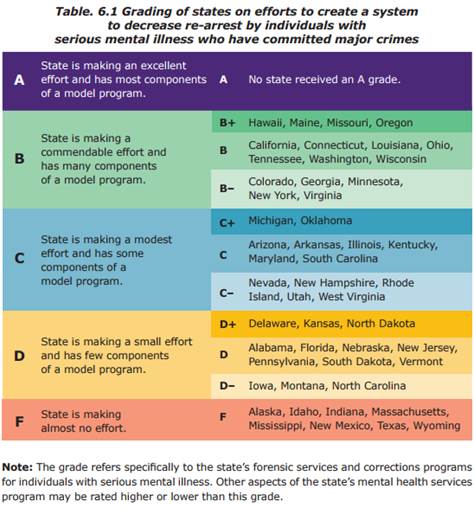
http://www.treatmentadvocacycenter.org/storage/documents/treat-or-repeat.pdf
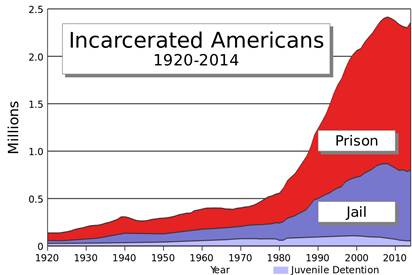
https://en.wikipedia.org/wiki/Incarceration_in_the_United_States
Sources:
http://www.treatmentadvocacycenter.org/storage/documents/treat-or-repeat.pdf
http://www.politifact.com/truth-o-meter/statements/2016/jul/10/cory-booker/how-war-drugs-affected-incarceration-rates/
http://arkofhopeforchildren.org/child-abuse/child-abuse-statistics-info
https://www.bjs.gov/content/pub/pdf/mhppji.pdf
https://www.globalresearch.ca/the-prison-industry-in-the-united-states-big-business-or-a-new-form-of-slavery/8289
https://www.workers.org/2015/05/04/punishment-for-profit-the-economics-of-mass-incarceration/
http://www.salve.edu/sites/default/files/filesfield/documents/Incarceration_and_Recidivism.pdf
CAPITALISM, MASS INCARCERATION, PRISON INDUSTRIAL COMPLEX ,By Bob Sloan, www.dailykos.com
May 19th, 2015
]]>The study, reported by The Eye, reviewed over 1,000 rulings where defendants had accused the prosecution of misconduct. The study showed that at least 120 criminal convictions since 1985 had been reversed due in part, or completely, to prosecutorial misconduct. On top of that number, another 250 cases involved criticism of the prosecutions behavior by judges, though determined to be “not serious enough to affect the jury’s decision”, therefore retaining the convictions.
The definition of “misconduct” varied from case to case, often involving prosecutors who failed to turn over vital evidence to the defense, misrepresented evidence in statements, or failed to disclose information that could discredit their witnesses.
The number of convictions that were ultimately reversed may be just around 10% of the convictions reviewed, but the real problem lies in the failure of the Massachusetts judicial system to monitor and discipline prosecutors that botch their job:
“NECIR found no case in Massachusetts where a prosecutor was disbarred for professional misconduct since 1974, when the state Board of Bar Overseers was created to hear complaints against attorneys. Only two public reprimands for professional misconduct were found in that 42-year span, and they came without fines or other punishment.” (The Eye)
That means courts are not naming names, or even providing a system to correct any kind of structural professional malpractice. Many are calling this out as a huge issue, especially considering how often prosecutorial misconduct leads to undeserved sentencing. The NECIR study alone showed 11 cases in which the defendants were exonerated from their charges entirely. Together, they served a total of more than 100 years of prison time. The other 109 cases saw defendants convicted again or pleading guilty, though often with lesser charges.
Critics of the practice of shielding the prosecution point out how difficult it is to track down and hold Massachusetts prosecutors who have a history of misconduct accountable. In all but seven of the 120 cases in which decisions were reversed, the prosecutors’ names were omitted.
The study also found that at least seven prosecutors whose professional misconduct led to conviction reversals had been promoted to higher posts, including judges and district attorneys. Even worse, they also identified four prosecutors whose actions had led to conviction reversals multiple times. Out of those, only one person was ever disciplined and now is practicing privately.
A professor at the William & Mary Law School in Virginia, Adam Gershowitz, who argues for naming names, explained that judges have worked as prosecutors, and can therefore often sympathize with the struggle of a heavy workload, or may simply retain a cultural rule against snitching.
Massachusetts’ failure to track and punish prosecutorial misconduct is an issue that clearly puts the public at risk, Daniel Medwed, a professor at the Northeastern University School of Law argues:
]]>“Prosecutors have more power than anyone, in many respects, over the lives of the average person. But there is almost no accountability, no transparency, and the public isn’t paying attention—that is a very, very combustible concoction.”
The Department of Corrections (DOC) Commissioner told the public that the riot was the result of a gang fight. That was not true. If only the truth were that simple. This “riot” was the culmination of a host of issues that have plagued SBCC. This incident could have been avoided and should have never taken place.
Earlier that day, at approximately 1:10 p.m., the P-1 housing unit inmates were being moved to the prison’s gym. About 10 minutes later all units on the North side first floor were permitted to send their inmates to school programs and work assignments. During this movement of prisoners, one inmate from the N-1 housing unit and one inmate from the P-1 housing unit fought on the North Side stairwell. They were two Irish white guys from Charlestown, Massachusetts.
After the two combatants were separated, questioned by the prisons Inner Perimeter Security Team (IPS) and seen by the medical department, they were placed in segregation.
The IPS, determined to investigate this one-on-one fight more thoroughly, ordered N-1 and P-1, the housing units where these two men lived, locked down. Lock down status requires that all inmates be confined to their cells and locked in. Whenever there is a fight inside a housing unit, that unit is put into lock down status. The IPS then questions the inmates in the unit about the disturbance. Questioning usually takes place the morning after the fight has occurred. This has been the recent policy at the prison.
The N-1 unit was locked down within an hour after the fight took place. Because the P-1 Unit was in the gym at the time, they could not be locked down until they came back from the gym at approximately 3:30. This lock down was a surprise to the inmates returning to P-1, because normally a unit is not locked down unless the fight happens in the unit between two inmates from the same unit. Since this fight took place with two inmates from different units on a stairwell, it was not normal procedure to lock down both units.
When a fight breaks out in a housing unit, that the unit is immediately put into lock down status for the remainder of the day. The following day, the IPS conducts interviews with the inmates in the housing unit where the fight took place. After the interviews are over, the block is then put into a “phase down.” This “phase down” permits 4 to 8 inmates at a time to come out of their cells for 15 minutes to take a shower and/or make a phone call. After the phase-down is complete, the lock down continues until the following day when a member of the prison Administration orders the unit to be taken off of lock down status. So, whenever a unit is put into lock down status that unit is locked down for at least a day and a half.
When the P-1 inmates returned to their housing unit, their housing Correctional Officer (CO) notified the inmates that they were in lock down. In a sign of unity, all the inmates went into the unit’s common area and sat down at the tables. They told the CO that they were not locking in until they were allowed to shower after an afternoon in the gym. The inmates knew that if they locked in they would not be able to shower until the following night during the “phase down.” The housing CO then called in a “group disturbance” over his walkie talkie. A “freeze up” of the entire prison was ordered and all units in the prison were locked in. Back up arrived for the P-1 housing CO. When back up arrived, the Superior Officers spoke with the inmates but they could not reach any agreement about the showers taking place before the lock down. The inmates wanted showers and the Officers wanted them to lock in without showers. There was no middle ground. Insults, threats, and negative words were exchanged by the inmates and officers. There was no backing down by either group.
Over the last several months a fear has been building up in the prison population at SBCC about inmates losing more and more of the few privileges they do have: contact visits, free time out of the cell, programs, schooling, phone calls to loved ones, getting mail delivered in a timely way – there were a host of issues that inmates had been complaining about for months. The shower argument that day was larger than this one issue. The frustration the inmates were exhibiting started building up way before this moment and they were ignored when they complained or aired their grievances to the prison administration.
One can go back and see how this simple issue of letting the inmates shower before locking them down for an extended period of time got out of hand.
In September of 2016, the Superintendent of SBCC, Steve Silva, allowed a local news channel to do a story about drug use at SBCC. The story was centered on how drugs are getting into the prison through the prison’s visiting room. The Superintendent was interviewed and stated that ‘contact’ visits were a problem with his prison. He failed to mention all the other ways that drugs get into his prison. When this story was aired, it sent a wave of panic throughout SBCC. Inmates were under the impression that this news story was a propaganda piece to set the stage to change their visits with their families and friends from contact visits to non-contact visits, where you sit behind soundproof glass and talk over a telephone.
Later that month, a work stoppage and hunger strike took place at SBCC. It was to show, in a non-violent way, the inmates’ displeasure with the DOC’s attempt to restrict visits, mail, phone privileges, etc.
This strike took place on the same day that DOC representatives testified at the Commonwealth of Massachusetts Regulation (CMR) Committee trying to persuade the committee to make these changes. The decision on those hearings has not been made yet. At SBCC, it feels like the inmates have been waiting for a bomb to drop on them. It has made SBCC a pressure cooker.
At the same time those tensions were building at SBCC, the inmate count was going up. In early 2016, SBCC housed roughly 900 inmates. The former Commissioner got the numbers down at SBCC by transferring more inmates to medium and minimum security prisons. This makes fiscal sense because it costs roughly $63,000 a year to house one inmate in maximum security (SBCC) as opposed to roughly $50,000 in medium security, and $40,000 in minimum security.
Since then, Governor Charlie Baker appointed Thomas Turco Commissioner of the DOC in April, 2016, and things have changed.
Turco closed a medium security prison (Bay State), lowered the count at another (Concord) by almost 40%, and has plans to close two more minimum security prisons in early 2017. The count at SBCC just before the “riot” was almost 1,200, an increase of 300 since Turco took over.
How Commissioner Turco increased the SBCC population is very questionable and quite possibly fraudulent.
Prior to Commissioner Turco taking over, when an inmate in medium security was found in possession of a controlled substance like home brew, suboxone, weed, etc., he was issued a disciplinary report and sent to segregation. After serving his time in segregation and being punished with sanctions (loss of visits, loss of phone, etc.), he would go back out to the general population at that prison.
After Turco took over, however, all medium security prisons started issuing every inmate who was found in possession of a controlled substance an “Introduction” disciplinary report. An “Introduction” charge is usually reserved for an inmate who is caught trying to smuggle contraband into the prison. The penalty for an “Introduction” offense is automatic transfer to SBCC. Thus, even an inmate with a drug problem who is caught with the smallest amount of a drug, and it is obvious that he didn’t smuggle the drug into the prison, is given the same punishment as someone who actually smuggles drugs into a prison. Turco added 300 inmates to the population at SBCC was by transferring roughly 300 non-violent drug users to the State’s maximum security prison, which was meant to house violent criminals. The cost is $63,000 per prisoner per year for each of these non-violent drug users. Keeping those non-violent offenders’ medium security prisons would save the Commonwealth 4 million dollars a year. Not to mention that SBCC is filled with non-violent drug offenders who are over classified in the DOC prison system.
While other states are leading the way with rehabilitation and treatment, Massachusetts is going
backwards yet again. They are moving away from treatment and toward retribution and harsher punishments. While most of the nation has learned that “Smart on Crime” is more effective in reducing the recidivism rate than “Tough on Crime,” Massachusetts continues to embrace the tough on crime stance started by Governor William Weld in the 1990’s. After all, reducing the recidivism rate in this state is bad for business.
When Governor Baker picked Turco to be his Commissioner of Corrections he chose a candidate
with little experience in the prison system. Turco went from being the Commissioner of Probation to the DOC. He is a numbers guy. Since he took over the DOC he has shown very little interest in providing inmates with rehabilitation and treatment which we all know helps reduce the recidivism rate. What he has done is increase the number of maximum security beds in the state while simultaneously closing lower security prisons. For a numbers guy to add almost 4 million dollars to the bottom line budget is very questionable. His decisions are not good for the inmates or the taxpayers who are footing this increased bill for maximum beds. But hey, at least they can say we’re tough on crime in this state.
Many readers will say “who cares about the inmates?” Well, the tax payers of Massachusetts should care. You are the ones paying for these ill-conceived policies.
The problems with SBCC have been an ongoing conundrum that goes back to before the prison was even built. This prison should never have been built. So why was it built?
Michael W. Forcier was a Sociologist who from 1986 to 1990 served as Deputy Director of Research at the Massachusetts DOC. His principal assignment was to conduct an evaluation of the DOC’s inmate classification system. October 28, 2003 Forcier testified before The Joint Committee on Public Safety. In his research, he discovered that many inmates were needlessly confined in higher security levels then was necessary. He looked at 300 plus inmates’ classification reports and “re-classified” them himself by using the National Institute of Corrections (NCI) objective point-based scale. He found that nearly half of the inmates (49%) were over classified. Forcier stated that “over classification not only results in wastage of scarce bed space and resources, but also, buys you no more public safety.” Forcier’s recommendation to the DOC was that they needed more minimum security beds.
One week later, the DOC requested 1,000 new maximum security beds and SBCC was born.
Forcier advised the committee that even former DOC Commissioner, Larry DuBois, requested that more inmates be placed in lower security beds because of the crunch in medium and maximum security facilities. No one was requesting more maximum security beds at that time.
The Governor at the time, William Weld, however, was a ‘tough on crime’ Governor. His decision to open SBCC has been a thorn in the sides of Massachusetts tax payers for years. It seems that no politician in Massachusetts wants to address the SBCC problem, they’d rather keep on kicking it down the road for someone else to handle, all the while burning a hole in the tax payers’ pockets.
Back to present day SBCC: there were signs that the prison had been unstable since the work stoppage in September, 2016. There was a large fight in the prisons chow hall, where 15 men fought each other and were subsequently placed in segregation.
Shortly after that fight there was an 8 man fight in one of the prison housing units. This was in addition to all the fights and disturbances that normally happen in this prison. During all this time, the inmates had been trying to file grievances and be heard by the Prison Administration on many issues that the inmates felt were unfair or plainly harassing.
Throughout the 2016-2017 holiday season most units were confined to their housing units and were not allowed to go to the prison yard or to the gym. There were numerous “modified lock downs” due to shortages of staff taking time off or calling in sick. Incoming mail was being held as contraband and not delivered to the inmates because of new and arbitrary reasons that did not make any sense to the inmates. Family members who came to the prison to visit with their loved ones were turned away for more arbitrary reasons. One woman was turned away because the officer in charge said her outfit was not up to code. When the woman produced a photo that she took in the prison visiting room one month earlier where she was wearing the same clothing and asked to see someone in charge, she was threatened with being barred permanently from the facility if she didn’t leave immediately. Inmates were denied access to programs, again with arbitrary reasons.
All this was going on at the same time the inmates were waiting for the CMR committee to issue their findings on the proposed changes. When inmates talked with the prison administration about these issues (mail, visits, etc.), they were given condescending responses. And nothing changed. It just got worse.
It is a widely-held view among the inmate population at SBCC that they are being treated arbitrarily and dismissively because the prison administration and the Department of Corrections are encouraging unrest at SBCC. For the last several years the DOC has endured budget cuts, as all state agencies have. If the inmates start acting up, it gives the DOC more reasons to ask for more money from the state in the next budget to handle all these “violent maximum security level inmates.” The DOC benefits if the inmates act up. So, if they treat the inmates like animals they are hoping the inmates will act like animals.
The DOC budget is one of the biggest budgets in the state. Yet, there is no oversight committee for the Department of Corrections. For years, politicians have been trying unsuccessfully to put together an oversight committee for the DOC. The DOC has been able to do business without having to get approval from the state house. Lack of oversight and accountability opens the door for the misappropriation of funds. Who investigates the DOC if there are allegations of fraud? Apparently, no one. Anyone who tries to oppose the DOC would most likely be accused of taking the side of the inmates. They would be “soft on crime” probably “liberals.”
The Governor needs to do what he did with the MBTA and appoint an oversight committee for the DOC.
On the day of the so-called “riot,” the Commissioner stood before the media and said the “riot” was the result of a gang fight between two rival gang members. That was not true.
The inmates in one housing unit, none of whom were involved in any altercations, refused to lock in until they were allowed to shower. The correctional officers abandoned the unit. This is the first time, in almost 20 years of operation, that officers at SBCC ever abandoned a unit to inmates.
Why now? Why especially when there was absolutely no violence or threat of violence? The inmates didn’t want to fight the COs; all they wanted was a shower. The inmates let the CO’s leave the unit without incident. Yet, the DOC Administration told the public at the news conference that the inmates were ready for war. If they were ready for war, why did they just let the CO’s leave?
Later, the DOC showed pictures of weapons that were found in the aftermath of the riot. This led the public to believe that the inmates made several ‘shanks’ during the 3 hours they were in the block. There was no way those weapons were made during the “riot.” These weapons were already in the housing block, which shows that the inmates could have used them before the COs left. All these inmates wanted was a shower, not a war.
Did the officers know what the inmates would do if they abandoned the unit? Of course they did. The inmates ripped the unit apart. After all these months of frustration, feeling harassed, being treated like animals, they acted out. They gave the DOC exactly what they wanted, video footage of the inmates ripping apart a unit. Now they could show the public how violent they are. That video was given to the media and was breaking news the very next day. When the 15-man fight happened in the chow hall several weeks before, one inmate was dropped on his head while he was handcuffed behind his back. He split his head open and was last seen by several inmates being wheeled on a stretcher with an oxygen mask covered in blood. Why didn’t the Commissioner release that video to the media? Could it be because it was a CO, not one of the combatants, who dropped the handcuffed inmate on his head?
The video that was released by the DOC of the “riot” doesn’t show any violence toward the CO’s or among the inmates themselves.
Everybody agrees things need to change at SBCC. But, what changes are needed? What will be done? Is there even going to be an investigation into the chow hall incident or the so-called “riot”?
Governor Baker should appoint a bi-partisan committee to look into the DOC and what has been happening with the movement of prisoners to maximum security, the unrest, the understaffing, and the abandonment of a unit to inmates, etc., but will he?
That fear still permeates the inmates at SBCC about when the when the CMR committee will make their findings public. What will happen at SBCC if those findings result in more restrictions to the inmates at SBCC?
The Governor cannot wait to investigate the DOC and SBCC. The inmates need answers now. They’ve been ignored for far too long.
By Padraig Collins
]]>However, if you are telling the story of a wrongfully convicted person, you are asking those same terribly injured people to suspend their absolute belief that the person who was convicted of the crime is the person who harmed them or their loved ones. This is a whole different proposition and one that not many victims and their supporters can tolerate. A lot of them have been moving through their lives, sometimes for decades, safe in the knowledge that the right person is in prison. The writer not only re-opens the old painful wounds caused by the loss of their loved one again, but inflicts a new pain: the thought that perpetrator may still be at large.
In my book, The Politics of Murder, I am asking exactly that of those who suffered through the loss of Janet Downing in July of 1995. Believe me, I understand what a horrific proposition I have put before them. I thought long and hard about that during the entire year I was researching and writing this book.
What kept me going was my belief that exposing the facts as I unraveled them from the evidence and the testimony in this case, could possibly – just possibly – expose Janet Downing’s real murderer. If Janet Downing was my friend, mother, sister, wife, aunt, daughter, neighbor I would want to know that the investigation into her murder was as thorough as possible and that every conceivable piece of evidence was analyzed before any conclusions were made. I’d want to know that the state did everything in its power to track down all the clues and follow every evidentiary thread until there was absolute certainty about the perpetrator.
In my opinion Janet Downing didn’t get the thorough investigation that she deserved. In my opinion, the state didn’t really care about who killed Janet Downing, they cared only about getting a conviction and convincing the public and the friends, family and neighbors of Janet Downing that the person they convicted was the perpetrator. The Middlesex District Attorney’s office already had one very public unsolved murder in Somerville when Janet Downing was murdered. The city was up in arms because what seemed like a straightforward case was mired in confusion following her murder.
Unsolved murders are bad for business if you are a district attorney. People don’t vote for you when you can’t solve murders.
Under DA Tom Reilly’s watch, two high profile murders went unsolved in Middlesex County:
- On April 4, 1991, Mary Jo Frug was stabbed to death at dinnertime in Cambridge near the home that she shared with her husband, Harvard Law professor Gerald Frug. No one has ever been charged with the murder.
- Four days after her 17th birthday, Deanna Cremin was strangled to death one block from her home in Somerville in March of 1995. No one has been charged for the murder.
Janet Downing’s murder happened just four months after Deanna’s. The pressure to solve this crime was enormous. And the rush to judgment was quick, based on fingerprints identified at the scene belonging to Eddie O’Brien.
But other fingerprints were found at the scene – other bloody fingerprints – in fact a whole bloody palm print was found. It didn’t belong to Janet Downing. It didn’t belong to Eddie. It didn’t belong to anyone in the Downing household. Whose bloody palm print was it? Wouldn’t you like to know? I know I would. I’d also like to know the identity of the male DNA on the alleged murder weapon, wouldn’t you? It wasn’t Eddie’s. Nor was the DNA under Janet’s fingernails Eddie’s.
Doesn’t Janet deserve at least that much? Doesn’t her family?
I understand how painful this is. I understand how angry people are for re-opening these painful memories and a previously closed chapter in their lives. I understand why they post angry messages on social media. I’m angry, too.
On the very day she was so brutally murdered, Janet Downing pleaded with her friend to promise her that if anything like what happened to Deanna ever happened to her, she would make the police “investigate, investigate, investigate.”
After attending all of the court hearings, and reading all the juvenile transfer hearing transcripts, the trial transcripts, all of the forensic reports, psychological reports, laboratory analyses of the blood work and DNA, the correspondence, the investigatory reports, the police reports and the witness statements, I came to the conclusion that what Janet Downing begged for that day was never done. The police did not investigate, investigate, investigate.
Do I believe that Eddie O’Brien is innocent? I most assuredly do. But more importantly, I believe whoever murdered Janet Downing can still be found. Janet Downing wanted a thorough investigation. The only person who wouldn’t want all these questions answered would be Janet Downing’s real murderer. He’s the only one with something to lose.
]]>
Once I’d committed to writing the story of Eddie O’Brien’s arrest, legal journey and trial, I sat down at the computer and wondered exactly how one organizes a book. Should I start with an outline? I realized I had no idea how to organize a book. I didn’t know anyone who had written a book who I could ask. Finally I decided that perhaps I should just start writing and see where that took me.
I knew I wanted to start with the day of Janet Downing’s murder from Eddie’s point of view. That led seamlessly into telling the story of the same day from another important person’s point-of-view, Gina Mahoney, who spent the entire day with Janet before she was murdered so brutally the night of July 23, 1995. The book’s organization evolved organically, as I introduced the main characters in the story. It made perfect sense, then, when I moved to the “legal” part of the story to tell it as it unfolded day by day during the long days of the trial.
I recently remarked to a colleague “the book really wrote itself.” Letting the book evolve during the writing process, turned out to be the most authentic way to write The Politics of Murder.
As I moved through the trial transcripts, inch by inch, I was struck by something I had not even considered at the outset of the story: what an overwhelming experience it is to be a juror. I had to translate the legalese language for the reader, so the book didn’t sound like a textbook. But no one did that for the jurors. They were thrown into a world where they were bombarded with legal terms they didn’t understand (or worse, misunderstood), instructions that actually were from a legal textbook. They had to sit for days through the most complex scientific testimony that used acronyms like RFLP and PCR, neither of which was made clearer by its full name. And they couldn’t take any notes. Eleven full days of trial testimony and exhibits and chalks, followed by two hours of closing arguments, then three hours of non-stop jury instructions on the law that they were bound to adhere to in coming to a unanimous decision. At one point I sent the entire 86 pages of Jury Instructions to a friend to ask her how much of them I needed to include in the manuscript. She wrote back:

“Saying that they are tedious, confusing, mind-numbing, and seemingly contradictory just doesn’t capture it.”
I knew then that I wanted to give the reader a sense of just how hard it is to be a juror, especially in a case where your decision may send a child to jail for life. Thus, the story evolved to include something I’d never even considered including in the book.
We (lawyers and judges) expect much more of jurors than we like to admit. What’s worse is that we constantly make fun of them: “Jurors are people who are too stupid to get out of jury duty.”
I gained a whole new respect and understanding of jurors in writing this book. I hope that you will too.
THE POLITICS OF MURDER: The Power And Ambition Behind “The Altar Boy Murder Case” is coming from WildBlue Press on November 22, 2016! Pre-order your copy today to save!

https://wildbluepress.com/politics-of-murder-margo-nash-writing-process/
]]>At some point during this time frame, the circle of friends they have had since they were children begins to change before their eyes. They’re getting older. Conversations are now about new things, new experiences, new passions and new interests.
One of those friends, by some set of circumstances, will probably get ahold of some weed, and the group will agree it’d be exciting to try.
From that point forward, a failed legal system is set in place which ensures that the situation is dealt with in the most erroneous, counter-productive, foolish way imaginable. If the consequences this system weren’t so tragic, the War on Drugs would be comical in that it manages to make every problem it tries to address ten times worse.
The War On Drugs tells that child who decided to try smoking pot with a few of their closest friends that they are a criminal. They may begin thinking of themselves differently, engaging in other (more destructive) criminal behaviors because they already had a taste of that label.
And what if they have a good experience with it?
What if they experience marijuana as a relatively non-dangerous substance that doesn’t even hurt as much as their parents’ alcohol that they tried a few months before? The War on Drugs tells that person that the law is inconsistent, labelling alcohol as legal yet criminalizing a plant that doesn’t even cause too much of a hangover.
Maybe the War on Drugs was wrong about other substances too. Cocaine? Pills? Something even more addictive?
The War On Drugs also ensured that marijuana is more accessible to that child than alcohol is at their age, thanks to the entire industry being forced into the unregulated black market.
The truth is, whether a person starts using drugs through an experience in school, whether they try it for the first time at a fast food chain they got a job at, whether it simply slipped its way into their social life otherwise, drugs are a part of human culture. People are going to do it – and it is going to be a huge huge health issue for those who end up addicted to something.
Instead of labelling this human behavior as a criminal offense and trying to stop substance use in its tracks (a goal that has failed miserably), why not drop the stigma, regulate intelligently and give people real medical help when they need it – not jail time?
Instead of continuing a system that disproportionately oppresses low-income people and people of color, sometimes by design, why not build a compassionate system that genuinely aims to improve the lives of people through a realistic drug policy?
Instead of making it even harder for people to get off of drugs by punishing them rather than supporting them, why not strip this ridiculous criminalization of substance use? Why not genuinely care about the people who choose to try drugs due to inevitable socio-political or economic factors, and help make sure they stay healthy and don’t become a danger to anyone around them?
Look, these policies are stupid. They just exacerbate the problem of substance use and abuse.
If you want any more proof of it, read this CNN article in which an aide to Nixon admits about the War on Drugs:
“The Nixon White House…had two enemies: the antiwar left and black people. You understand what I’m saying? We knew we couldn’t make it illegal to be either against the war or black, but by getting the public to associate the hippies with marijuana and blacks with heroin, and then criminalizing both heavily, we could disrupt those communities. We could arrest their leaders, raid their homes, break up their meetings, and vilify them night after night on the evening news.
Did we know we were lying about the drugs? Of course.“
I know this speaks for itself, but the fact that this farce has gone on for so long is an outrage.
We need to legalize and regulate marijuana, a substance that is probably less dangerous than alcohol, but can cause serious issues when used at a young age. Several states have already taken this step, with a general absence of negative consequences being reported.
We need to decriminalize all other substances and treat people with addiction in a compassionate, care-focused manner.
We need to stop letting the pharmaceutical industry make opiate addiction a bigger and bigger problem and look into possible alternate solutions for pain relief and decreased dependency on addictive painkillers.
We need to care about people, and we need to end the War on Drugs.
]]>